
 Magyar

Health & Ergonomics
What is Ergonomics? 4 Principles for a Pain-Free Office (Guide 2025)
“What is ergonomics?” As an expert, I often hear this question, and the answer goes much deeper than “comfortable chair”. Ergonomics is not a product, it is a science. It is the science that adapts work, tools and the environment to the human being – not the other way round.
If you’ve ever felt your back ‘crushed’, your neck stiff or your wrists numb by the end of the day, you’re a victim of poor ergonomics. A poor working environment not only causes pain, but is quietly destroying productivity, focus and overall quality of life.
At Ergomax.hu, with 31 years of experience, we believe that pain-free work is not a luxury, but a fundamental right. This guide will be your personal map. We will not get lost in Latin terms. Instead, I’ll present the 4 principles that every healthy office – whether it’s a corporate “open office” or a tiny corner of the home – should be built on.
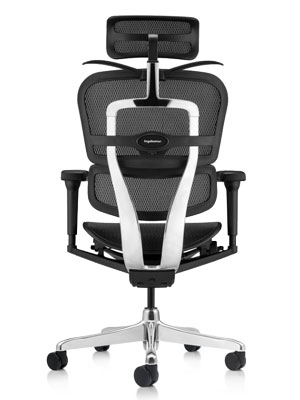
1. THE DINAMIC TAMAS (The Chair)
The alpha of ergonomics. Our spine has a natural “S” curve. The biggest mistake we can make is to ‘flatten’ this curvature with a static, straight-backed chair, putting enormous strain on the vertebrae.
However, the solution is not a simple “pillow”. The spine needs not only stable support but also movement. This is called active or dynamic sitting.
The most important tool is a chair that doesn’t restrict you, but moves with you. A quality chair:
- It hasa customisable waist support that fits exactly to the curve of your spine.
- It hasa synchronous mechanism that follows your movement, constantly supporting your back while stimulating blood circulation.
- Adjustable at all points (armrest, seat depth, headrest) to fit your body shape perfectly.
The chair is the base you sit on, your “throne”. If this base is unstable, your whole system collapses.
➡️ Want to find the perfect fund for you? Read our article Perfect Ergonomic Chair: the Ultimate Guide!
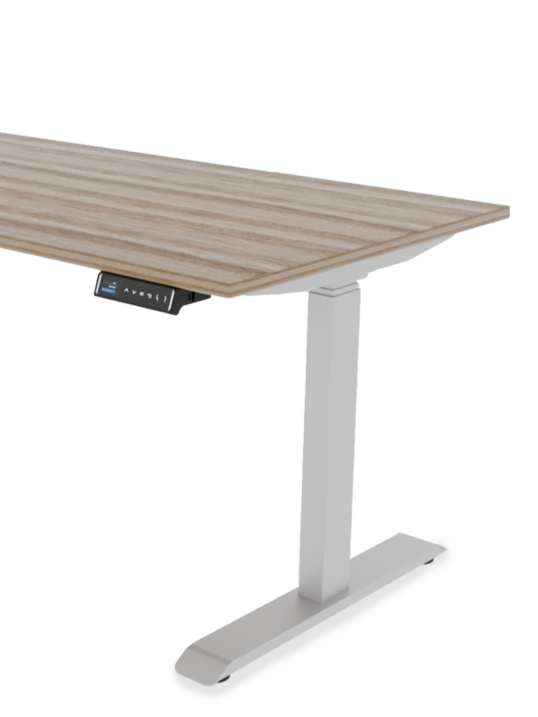
2. THE MOVING FABRIC (Your Table)
I’ll let you in on a secret: even the best ergonomic chair in the world will make your back ache if you sit still for 8 hours. The human body is designed to move. The problem is not the seat, but the constant, static sitting.
This is where the second principle of ergonomics comes into play: changing position. The key to modern working is the sit-stand method.
A height-adjustable table allows you to switch between a concentrated sitting position and an energising, circulation-stimulating posture every hour or even every half hour. This is not a fad, but the most effective antidote to “sitting sickness” (obesity, circulatory problems, chronic back pain).
- By standing you relieve the load on the discs.
- You stimulate your blood circulation, which gets more oxygen to your brain (goodbye, afternoon “food coma”!).
- You burn more calories.
The chair is your support, but the table gives you the freedom to move.
➡️ Ready for a change? Learn all about sit-stand work in our article Adjustable Height Table: The Ultimate Guide!
3. SUMMARY OF THE SECTION (Your Supplements)
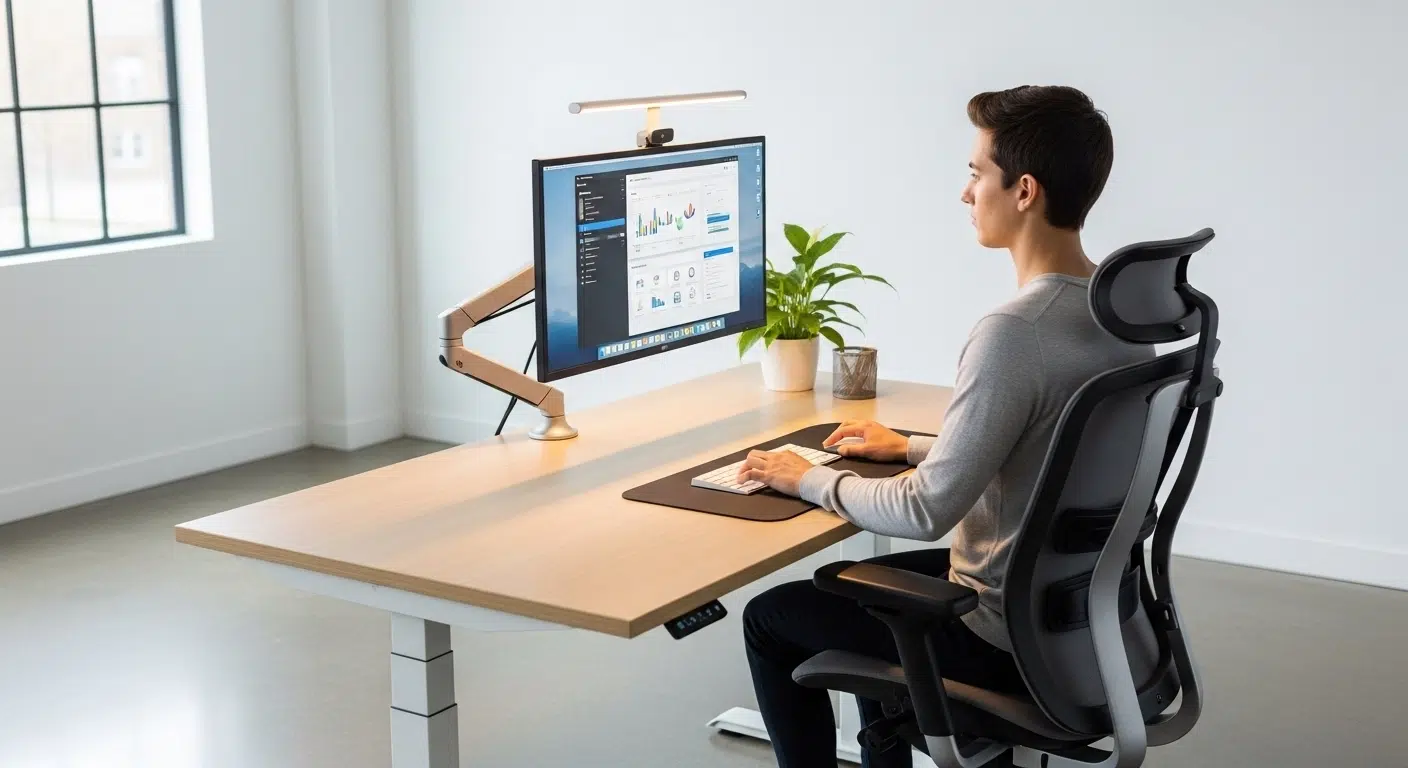
You have a perfect chair and an adjustable table. But your neck still hurts and your wrist is numb. Why? Because ergonomics is a system, and a chain is only as strong as its weakest link.
Accessories are the touch points where your body connects directly to the technology. If these points are at the wrong angle, the whole system is thrown off balance.
- Your monitor (neck pain): when you stare at your laptop on the desk, your head is constantly tilted forward. This is a guaranteed neck ache. The solution is a monitor arm or laptop stand that raises the top of the screen to eye level.
- The Egered (Wrist Pain): the traditional mouse forces your wrist into a “palm down” position, causing unnatural tension. The solution is a vertical mouse that holds your hand in a “hand grip” position.
- Your Keyboard (Shoulder Pain): a wide keyboard makes you “reach” for your mouse, which strains your shoulders. A compact or split keyboard allows for a natural, shoulder-width hand position.
- The Foot (Foot pain): if the foot does not rest firmly on the ground, a footrest provides the necessary support.
It’s the ‘little’ things that determine whether your expensive chairs and tables can really make a difference.
➡️ Want to tune your system to perfection? Dive into the details with our Ultimate Guide to Ergonomic Accessories article!
4. ENVIRONMENTAL HARMONY (The Space)
The last principle is the one that most people forget. Ergonomics extends to the whole environment that surrounds us.
What do I mean?
- Lighting: it’s useless to sit well if you have to squint or your monitor is glaring because of the window. Poor lighting leads to eye fatigue, headaches and a compensatory deterioration in your posture (you lean forward to see the screen better).
- Acoustics (Noise): constant background noise (whether it’s an office conversation or the washing machine at home) is one of the biggest stressors, increasing tension and reducing focus.
- Arrangement: a logical layout, where everything is within reach and there is enough room to move around, is essential.
The aim is to create a ‘bubble’ where your body and mind are under minimal stress and everything is conducive to focused work.
➡️ Want to improve your own space? Start designing with our “Little Cute Home Office Design Workbook”!
Summary: Ergonomics is a System
You can see that ergonomics is not a product you buy, but a system you build. It’s a way of thinking.
These four principles – Support, Movement, Harmony and Environment – form the philosophy of Ergomax.hu. We don’t just sell chairs and desks; we help you build a personalised system that allows you to work healthily and productively for the long term.
If you have questions or need help building your own system, contact us or learn more about our philosophy on our expert introduction page!
Frequently Asked Questions (FAQ)
Is ergonomics only about expensive products?
No. Ergonomics is about principles. Adjusting a cheap chair correctly (e.g. with a cushion behind your waist) or lifting your monitor with books is an ergonomic step. Premium products (like the ones we offer) can help you achieve these principles in a much more efficient, durable and comfortable way.
Is ergonomics only important for sedentary work?
No. Ergonomics is present wherever humans and a system (device, environment) meet. It is important in the kitchen (counter height), in the car (seat adjustment) and in industrial work (tool grip).
How do I know my ergonomics are bad?
Your body signals. If you regularly feel pain, numbness or stiffness at the end of the day (typically: waist, neck, shoulders, wrists, eyes), it’s almost certain that your working environment is not in tune with your body’s needs.
Tetszett a cikk? Ne maradjon le a következőről!
Csatlakozzon az Ergomax közösséghez! Szakértői tippeket küldünk a hátfájás ellen, és elsőként értesítjük az exkluzív akciókról. Kezdje a fájdalommentes munkát még ma!