

 Magyar

Health & Ergonomics, Spine Protection and Posture Correction
The “Soldier Pose” Fallacy: Why Does Your Back Hurt When You Sit Straight?
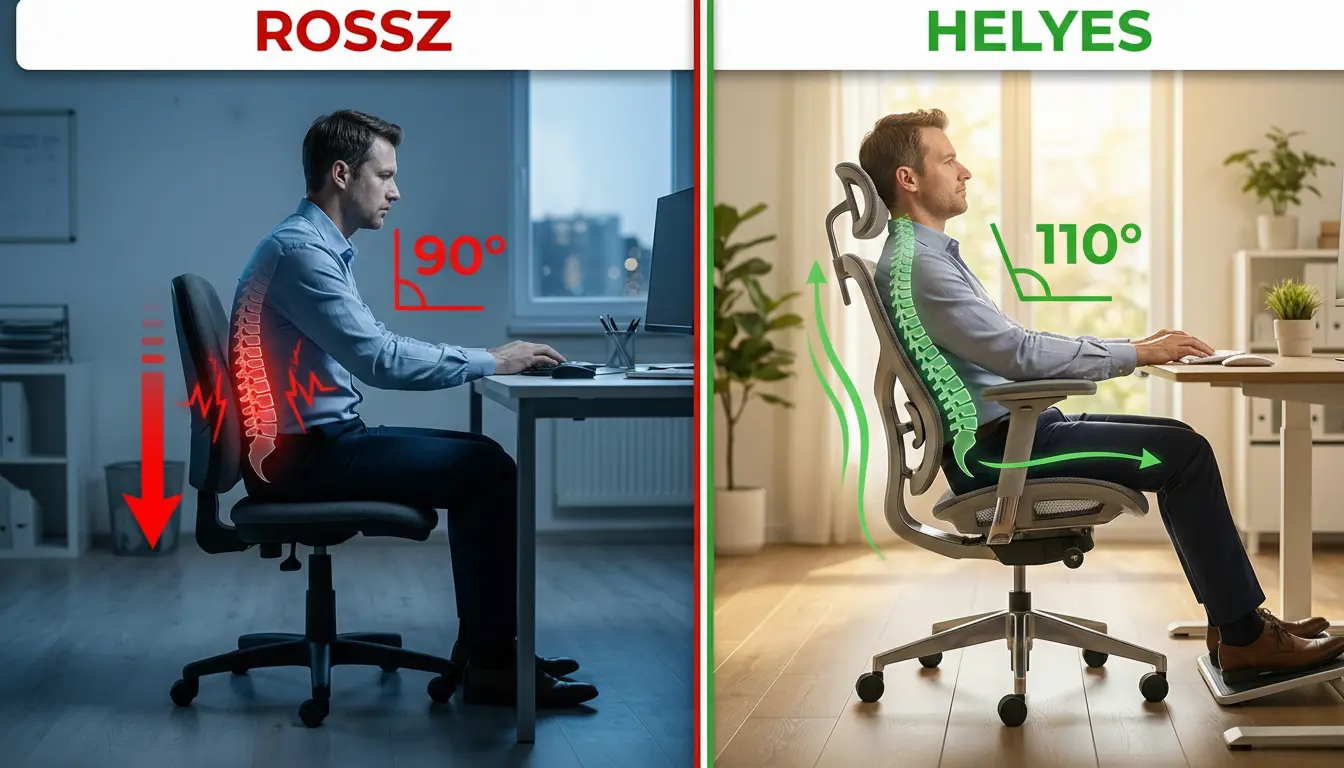
“Pull yourself out! Sit up straight!” How many times did you hear this as a child from your teachers or parents? We were taught that the correct way to sit was to sit at 90 degrees, like a statue. But here’s the bad news: this outdated advice is destroying your spine.
Have you experienced it? In the morning you decide “I’m going to sit nicely today”. You pull yourself out. 15 minutes later, your back is tight. After 30 minutes, your muscles are tired. After 1 hour, you find yourself slouched in front of the monitor or slumped in your chair.
The fault is not yours. The fault is in the 90 degree theory. In this article, I will show you why Dynamic Seating is the Holy Grail of modern ergonomics and how to use your chair correctly.
What’s wrong with sitting “cathedral style”?
When you sit at a 90-degree angle with your back straight, gravity squeezes your vertebrae inexorably. This position requires a huge muscular effort from the torso to maintain balance. Muscles quickly fatigue, blood circulation deteriorates and the pressure on the discs reaches a maximum.
According to measurements by NASA and ergonomics research institutes, the load on the intervertebral discs is lowest at an inclination of 110-135 degrees. So a “relaxed”, slightly reclined position is actually healthier!
The Solution: the Active (Dynamic) Seat
The human body is designed for movement, not static support. The key is not to find the “one perfect position”, but to keep changing it.
What does this mean in practice?
- When you’re typing or concentrating: Leaning slightly forward (active phase).
- When reading, talking on the phone or thinking: lean back and let the chair support your weight (resting phase).
This “rocking” pumps fluid into the discs and keeps the circulation moving. But you need a special device to do this.
The biggest mistake: “Fixing the chair”
Many of our customers buy an expensive, professional chair, and then the first thing they do is find a lever to fix the backrest at a point. This effectively “kills” the most important function of the chair and turns it into an expensive cheap seat.
What is Synchronous Mechanics?
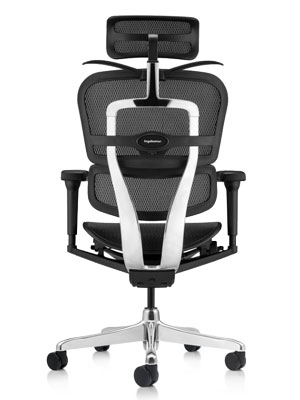
Good ergonomic chairs (such as Mirus or Ergohuman) have synchronous mechanisms. This lets you know that:
When you recline, the seat and backrest move in unison (synchronously) but at different angles. This keeps your waist supported, your feet off the ground and your clothes from sliding up your back.
Correct use:
- Release the anchorage (to allow the chair to rock freely).
- Adjust the spring force (for your body weight): it’s good if you don’t fall backwards, but you don’t have to push hard. It should keep you “floating” anywhere.
- And leave it like that! Move with the chair all day.
The “Next Position” Rule
There is a saying in ergonomics: ‘What is the best posture? Next!”
Don’t try to sit “well” for 8 hours. Sit back for 20 minutes. Then sit upright for 10 minutes. Then put your feet up on the footrest. Then stand up.
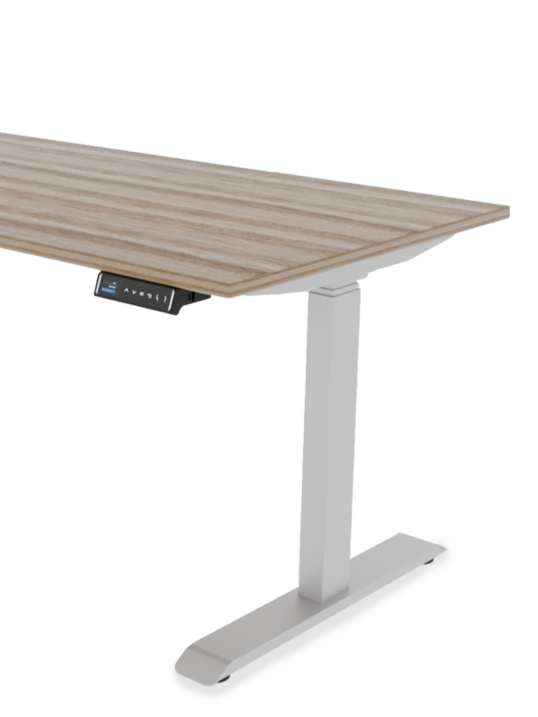
If you have an adjustable desk, the formula is even simpler: 45 minutes dynamic sitting, 15 minutes standing. That’s the recipe for a pain-free workday.
Summary: Release the tension!
Forget the “I’m pulling out” compulsion. Instead, invest in a chair that supports your body’s natural need to move. Your spine will thank you for it.
➡️ Check out our chairs that make moving a pleasure!
Frequently Asked Questions (FAQ)
Is it really healthier to work with your back turned?
Yes, to some extent. Research shows that a 100-110 degree angle of inclination is the most effective in reducing pressure on the discs. However, it is important to keep your neck supported (with a headrest) and the monitor at eye level.
Why does my back hurt when I rock on the chair?
The spring force is probably incorrectly adjusted, or the chair does not have the right back support. If the spring is too weak, you will “fall” backwards and your waist will tighten. Adjust the spring stiffer to support your weight!
Can all chairs do this dynamic movement?
Unfortunately, no. Cheaper chairs have only a “rocking mechanism” (where the seat and backrest tilt together, lifting the leg) or a fixed backrest. True ergonomic movement requires a “synchronous mechanism”.
Tetszett a cikk? Ne maradjon le a következőről!
Csatlakozzon az Ergomax közösséghez! Szakértői tippeket küldünk a hátfájás ellen, és elsőként értesítjük az exkluzív akciókról. Kezdje a fájdalommentes munkát még ma!