

 Magyar

How to choose a chair, Office Chair Guide
How to choose an ergonomic chair for your body shape? (High, Low, Heavy Weight)
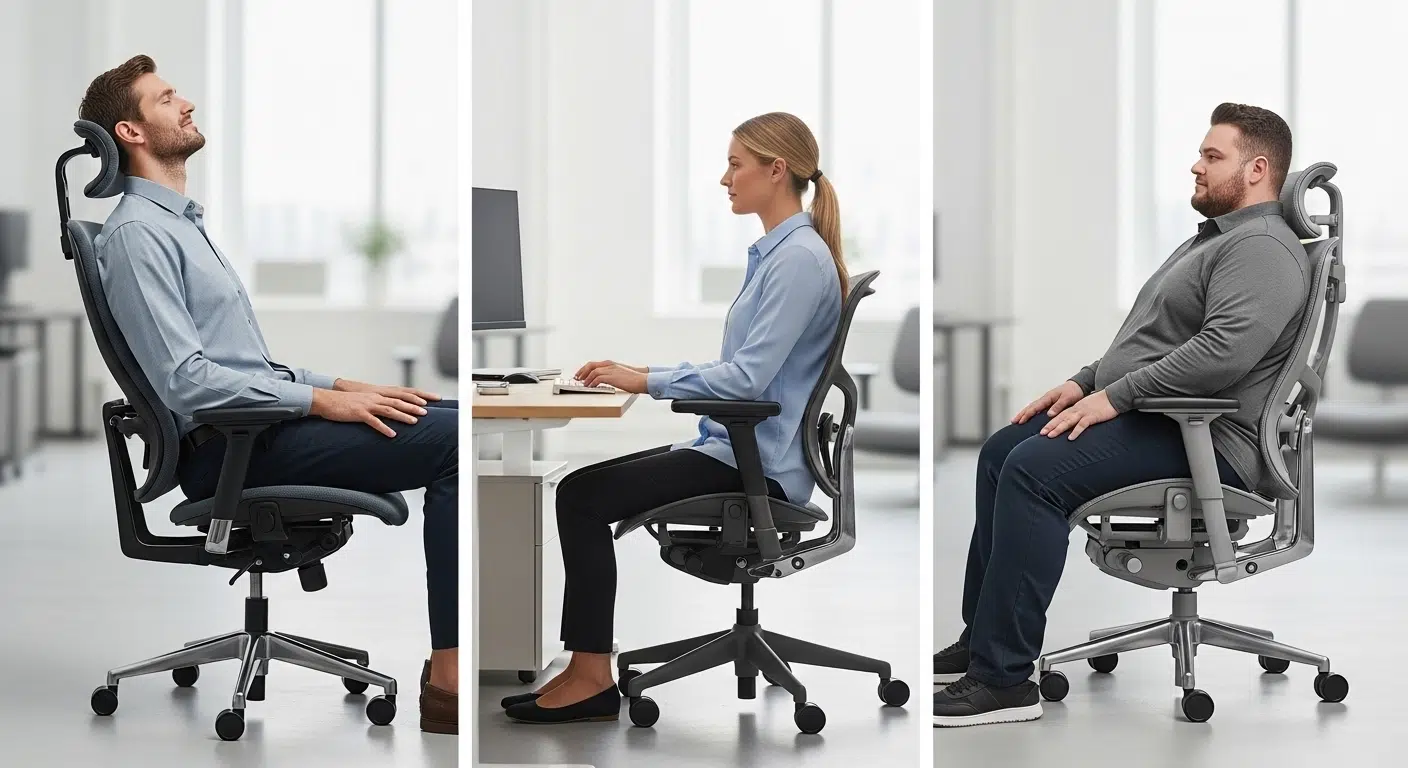
As an expert, one of the most common mistakes I see is that buyers only look at the “look” or the price of the chair. And the biggest mistake is when a 190 cm, 110 kg husband tries to use the same chair as his 160 cm, 55 kg wife. In ergonomics, there is no “one size fits all”.
A chair that provides perfect support for one person can be uncomfortable and even harmful for another. The good news is that modern ergonomic chairs are designed like a good suit: they can be tailored to fit.
In this article, we’ll take you through the three most common physique challenges and show you which features to look out for when choosing. If you’re still learning the basics, start with our main ergonomic chair guide!
I. Tall Users (over about 185 cm)
The biggest problem for tall people is that most “average” chairs are “small” for them. They feel like they are sitting in a school desk.
The 2 Main Problems:
- Short seat: most of their thighs are hanging in the air and they have to keep their knees uncomfortably high. Most of the body weight is concentrated on the buttocks instead of being distributed over the thighs.
- Low backrest/headrest: The backrest is too low and pushes in the wrong place (sacrum) instead of the lumbar.Worse still, the headrest does not reach the back of their head but pushes their shoulders forward, forcing them into an uncomfortable, hunched posture.
The Solution (Look for these functions):
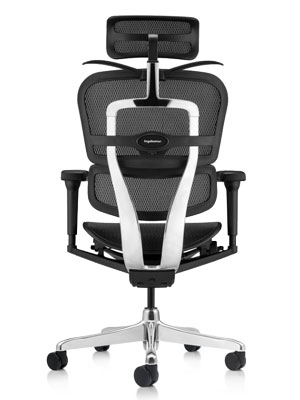
- 1. Adjustable Seat Depth (Mandatory!): This is the most important. It allows you to slide the seat forward so that it can support your thighs perfectly, right up to the bend of your knees (where you should have 2-3 fingers of space).
- 2. Raised Backrest and Adjustable Headrest: Look for a model with a particularly high backrest and a headrest that is adjustable not only in angle but also in height, so that it supports the back of your head and not your shoulders.
- 3. Raised Gas Lift: Although the height of most chairs is sufficient, for extreme heights it is worth checking the maximum seat height or looking for a special raised gas lift.
➡️ Check out our adjustable seat depth model for tall users!
II. Low Users (under about 160 cm)
The problem for lower users is the opposite: they get “lost” in the chair. The biggest danger for them is when their feet don’t touch the floor.
The 2 Main Problems:
- The seat is too low: To get their backs to the backrest, their legs hang in the air. If they slide forward so that their feet reach down, their back is left unsupported.
- Cuts at the knee bend: A seat that is too long can cut off the blood vessels in the knee bend, leading to numbness and poor circulation.
The Solution (Look for these functions):
- 1. Adjustable Seat Depth (also required here!): This function is needed here so that you can slide the seat back, shortening the seat. This is so your back can rest comfortably against the backrest while your knees remain free.
- 2. Low Adjustable Gas Lift: Check the minimum seat height of the chair! The goal is to have the foot resting firmly with its entire surface on the floor, while your knees are at a 90-degree angle.
- 3. The Secret Weapon: The Footrest: If your chair or desk is too high, even in the lowest position, don’t despair! An ergonomic footrest is the perfect solution to this problem and provides stable support.
III. High payload (over approx. 100-110 kg)
Above average weight is not just about height, it’s about durability and structural stability. The components of an “average” chair (gas lift, mechanics) are simply not designed for this load.
The 3 Main Problems:
- Gas lift malfunction: the chair “lowers” itself and does not maintain the set height.
- Mechanism Breakage: cheap, thin metal mechanics can deform or break under constant load.
- Sponge “shrinkage”: poor quality seat sponge will lose its grip after a few months and become like sitting on a plank.
The Solution (Look for these functions):
- 1. Load capacity: this is the most important data. Don’t buy a chair with a load capacity that is not at least 10-15% above your body weight. Look specifically for models with a load capacity of 120 kg, 130 kg or 150 kg.
- 2. Reinforced Parts: this is the difference. Look for a reinforced metal (not plastic) foot bar, heavy-duty gas lift, and robust steel mechanics.
- 3. Durable Cushioning: don’t look for a sponge, look for a high density cold foam (more durable) or a premium, high stretch mesh seat that won’t “collapse”.
➡️ Check out our heavy-duty reinforced chairs!
Summary: Customization is the Key
You see, the secret to the perfect chair is customisation. The key feature that helps with almost any body shape problem is the adjustable seat depth. But the real comfort comes from choosing durable components that are the right size for your height and weight.
If you’re unsure, read our guide to setting up your chair or ask our experts to help you choose!

Tetszett a cikk? Ne maradjon le a következőről!
Csatlakozzon az Ergomax közösséghez! Szakértői tippeket küldünk a hátfájás ellen, és elsőként értesítjük az exkluzív akciókról. Kezdje a fájdalommentes munkát még ma!