
 Magyar

Health & Ergonomics, How to choose a chair, Spine Protection and Posture Correction
Office chair with hernia: What to choose in case of hernia (2025)
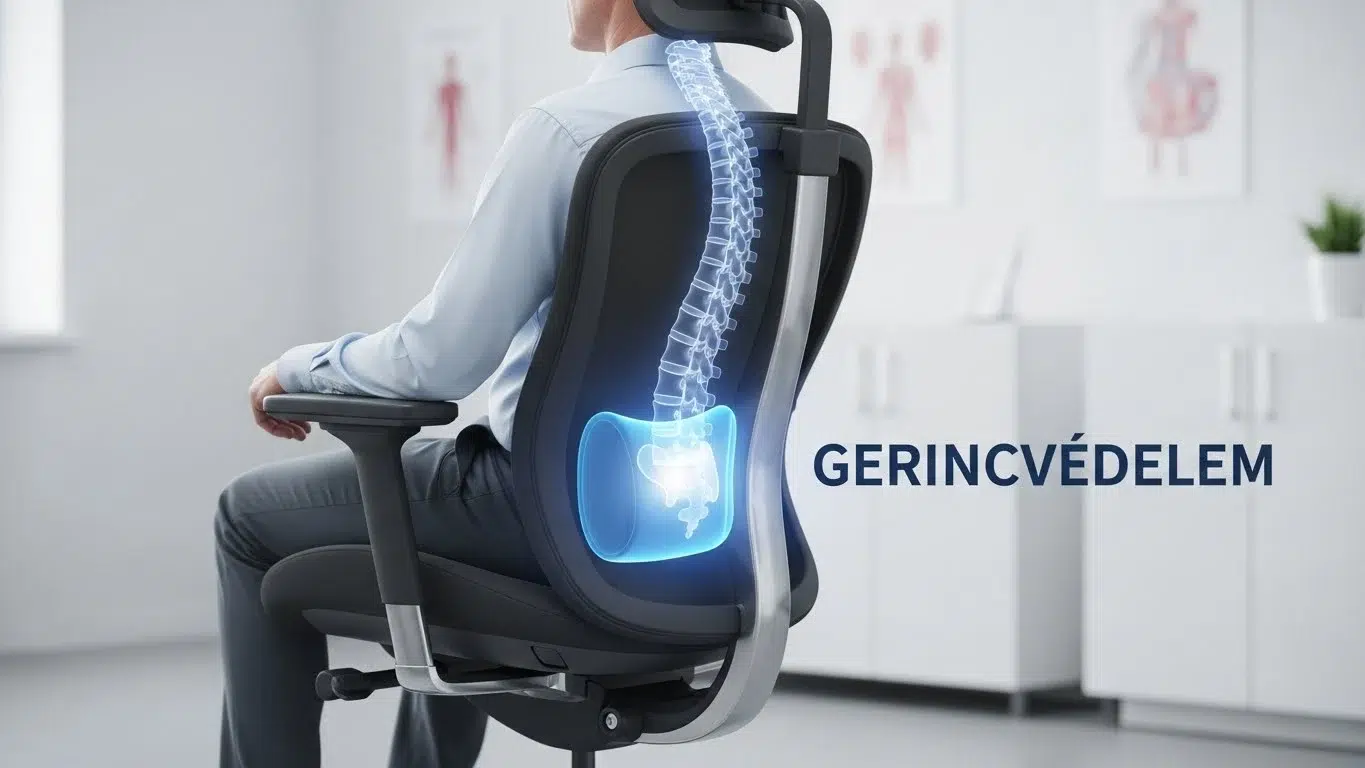
If you are reading this article, you are probably already over the simple “inconvenience”. Shooting pain, a numb leg or a diagnosed disc hernia is not a toy. In such cases, the choice of chair is no longer a furniture purchase, but a medical aid.
As an expert, I know that sitting with a herniated disc is often torture. Unfortunately, most chairs labelled as “ergonomic” are not suitable. A soft sponge will not solve the problem, and may even make it worse.
This guide is not intended to give general advice. Specifically, we will go through the features that are medically and ergonomically essential if you have a spinal injury or a weak waist.
The Problem: Why does sitting hurt for people with hernias?
Sitting can increase the pressure on the discs by up to 40-50% compared to standing. If the natural ‘S’ curve of the spine (the lordosis) is straightened – for example, because you are slouched in the wrong chair – this pressure is increased and the damaged disc can put pressure on nerves.
So the goal is one thing: to relieve the spine and maintain its natural curvature, even by force.
The 3 Functions Without Which Don’t Take a Break (If You’re In Trouble)
If you have a spinal injury, forget the “boss leather armchairs”. You need a precision tool. These three features are a must:
1. Active, Adjustable Depth Backrest
A fixed waist support is not enough here. You need a chair with a lumbar support:
- Height-adjustable: so that you can pull it exactly to the height of the damaged vertebrae (usually L4-L5).
- Depth adjustable (or flexible): this is the most important. The support should “press into” your waist to prevent your pelvis from sliding backwards.
2. Synchronous Mechanics (The Motion Medicine)
The worst thing you can do is to sit like a “statue”. Your discs need metabolism, which means they need to move. Synchronous mechanics allow the chair to follow your movement and provide continuous, dynamic support for your back without losing support.
3. Negative Face Tilt (Forward Tilt)
It’s a rare professional feature, but a salvation for hernia sufferers. It means that the seat is not horizontal, but slopes slightly forward (towards the knees).
Why is this good? Because it opens up the hip angle (from 90 degrees to about 110 degrees). This automatically tilts the pelvis into the correct position and drastically reduces the load on the lumbar spine. It’s like sitting on a wedge cushion, but built into the chair.
Which Type Should You Choose? (Specific Recommendations)
Best Choice: Professional Mesh Chairs
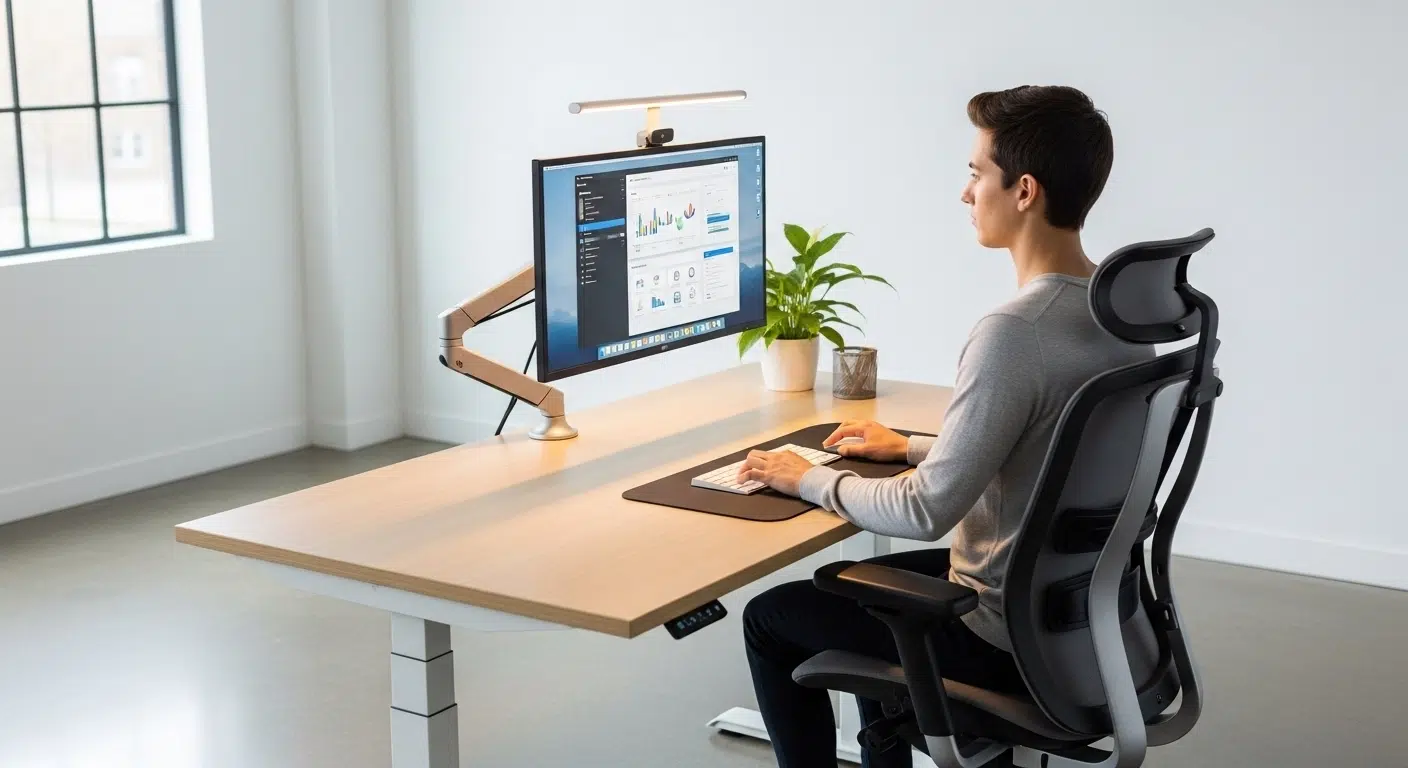
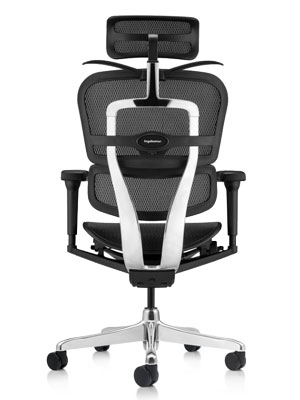
Why? Because the stretched mesh (like the Ergohuman models) provides flexible but firm support. It does not “sink in” like a sponge. The mesh takes the shape of your spine and their built-in waist support system is generally the most advanced on the market.
➡️ Check out our spine-friendly mesh chairs with lumbar support as a priority!
The Complementary Solution: the Standing Chair
If the pain is unbearable when sitting, it’s best to stand up – or half stand. A standing chair takes the strain off your spine while your legs work too. It’s an excellent ‘switch partner’ for your daily work.
Summary: The Chair Is Only One Side
A good office chair for herniated discs can reduce pain and stop deterioration, but it is not a cure in itself. The chair’s job is to take the load off while you work.
Do not save on your health! A chair costing 150-200 thousand forints is dwarfed by the cost of a spinal operation or months of sick leave.
Unsure about your choice? Read our article on choosing the perfect chair, or come and see for yourself which model suits your waist best!
Frequently Asked Questions (FAQ)
Can I use a fitness ball instead of a chair with a herniated disc?
For short periods only (20-30 minutes a day)! Although the ball is “active”, it has no backrest. When your deep back muscles get tired (which happens quickly with a hernia), you “collapse” and your spine is left unprotected. It can be dangerous for all-day work.
Is a hard or soft seat better?
For spinal problems, medium-hard is better. A sponge that’s too soft will cause the pelvis to tilt, which puts asymmetric stress on the disc. Tight mesh or harder cold foam gives the pool a stable base.
Is a headrest necessary?
Yes! Although the problem is in the waist, the spine is a connected chain. If your neck is not supported at rest, the tension will run down the spinal column and affect the lumbar spine. An adjustable headrest helps relieve the strain on the whole system.
Tetszett a cikk? Ne maradjon le a következőről!
Csatlakozzon az Ergomax közösséghez! Szakértői tippeket küldünk a hátfájás ellen, és elsőként értesítjük az exkluzív akciókról. Kezdje a fájdalommentes munkát még ma!